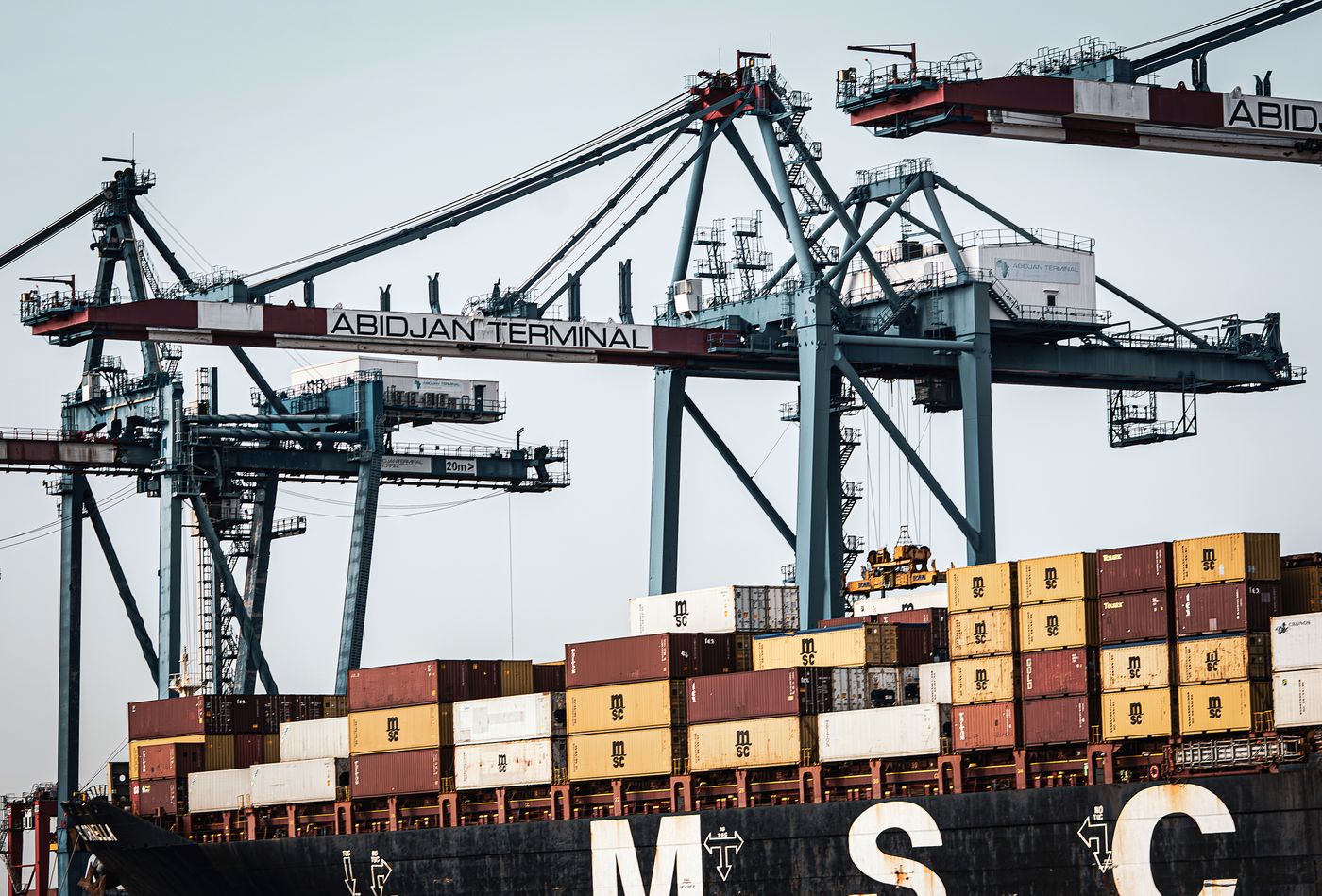

The Trump administration has announced it will terminate South Africa and Rwanda from the African Growth and Opportunity Act (AGOA) duty-free trade programme starting January 2027, despite South Africa's Trade Ministry confirming last week that it had "constructively responded" to US concerns. US Trade Representative Jamieson Greer said on Monday that both governments are
engaging in practices that are inconsistent with AGOA's eligibility criteria
citing barriers to American trade and investment, corruption and threats to US national security and foreign policy interests—without providing any specific examples, according to AllAfrica.
What Happened
President Donald Trump intends to remove South Africa and Rwanda from AGOA, a 26-year-old programme introduced by President Bill Clinton in 2000 that provides duty-free access to the US market for more than 1,800 products from over 30 sub-Saharan African countries, AllAfrica reports. South Africa has been AGOA's largest beneficiary, exporting $1.7 billion (€1.5 billion) worth of goods—including car parts, citrus fruit and wine—to the US under the programme in 2025. Rwanda has faced US economic pressure over alleged support of the M23 rebel group in the Democratic Republic of Congo; Washington sanctioned Rwanda's Defence Ministry last week, which denies any ties to M23, along with several individuals, institutions and a gold refinery, according to AllAfrica. The decision follows an AGOA review in February when Trump extended the programme. Greer's statement did not elaborate on the specific trade barriers or security threats cited for South Africa's termination.
Why It Matters
South Africa's Trade Ministry said last week that AGOA exports comprise only about 10% of its total exports to the US and 1% of its total global exports, and that
AGOA remains important to South Africa
but it does not constitute the totality of the economic relationship
with Washington
according to AllAfrica. Yet the South African citrus industry warned on Monday that its entire value chain
on both sides of the Atlantic
is now under threat
and that jobs and the economic security of entire communities is at stake. Cosatu
the trade union federation
said it is "deeply concerned" about thousands of agricultural and manufacturing jobs linked to AGOA
pointing to job losses already seen at factories and companies in Cape Town
Atlantis
Malmesbury and Tulbagh. The US Trade Representative puts American goods imports from South Africa at $16.5 billion in 2025—a figure that describes the wider goods relationship
not just AGOA-eligible products
AllAfrica notes. One expert cited by AllAfrica said South Africa's graduation out of AGOA
doesn't mean the country won't have any access to the US market. It will have access
but with slightly higher tariffs
describing exclusion as "a 3.4% tariff bump." President Cyril Ramaphosa has said in recent weeks that South Africa must prepare by seeking new markets and trade deals with partners like China, while the government pledged on Monday to provide support for affected sectors.
Follow the Value
South African citrus, wine and automotive exporters carry immediate risk: an estimated $1.5 billion in annual duty-free access evaporates, replaced by higher tariff costs that may render some shipments uncompetitive against other suppliers to the US market.
US buyers and importers gain no benefit: higher tariffs mean either higher landed costs or pressure to source elsewhere, fragmenting established supply chains.
Chinese, UK and intra-Africa markets stand to capture redirected South African volumes—if Pretoria, the ANC and exporters move fast. But AllAfrica notes that back in 2014, the US pressed South Africa to graduate from AGOA to a full bilateral trade agreement, a path blocked by Southern African Customs Union (SACU) rules that prevent South Africa from signing bilateral deals without the region, and by South Africa's own lobbying to retain unilateral AGOA benefits.
Processed-goods exporters face the starkest test: if South Africa's AGOA basket is dominated by citrus, wine and car parts—not high-margin processed foods, textiles or pharmaceuticals—then termination exposes how little value addition South Africa actually sells to America, despite decades of AGOA access.
Workers in Cape Town, Atlantis, Malmesbury and Tulbagh absorb the immediate shock, according to Cosatu, while multinational buyers, donors and investors watch to see whether the ANC pivots to intra-Africa trade and UK markets or defaults to blaming Washington while value addition stalls.
The Questions That Need Answering
- What are the specific "barriers to US trade and investment" and "threats to US national security" that Jamieson Greer cited for South Africa's termination? The US Trade Representative's statement provided no examples, leaving Pretoria, exporters and investors guessing whether the issue is tariffs, intellectual property, mineral export controls, geopolitical alignment with China or Russia, or something else entirely.
- If AGOA is only 10% of South Africa's US exports and 1% of global exports, why has Pretoria lobbied for decades to stay in the programme rather than graduate to a bilateral trade agreement? AllAfrica reports that in 2014 the US pressed South Africa to move beyond AGOA, but SACU rules and South African lobbying blocked that path—so is termination now exposing a strategic failure to diversify and add value?
- How much of South Africa's $1.5 billion in AGOA exports is raw or semi-processed commodities versus finished, high-margin manufactured goods? If citrus, wine and car parts dominate, does the loss reveal that 26 years of duty-free access failed to catalyse deep industrialisation and value capture?
- Can South African exporters absorb a 3.4% tariff increase and remain competitive in the US market, or will Chinese, Latin American and Southeast Asian suppliers simply capture the volumes? The 3.4% figure suggests manageable adjustment, but only if exporters have margin, quality and logistics advantages that tariffs alone won't erase.
- Will Ramaphosa's pivot to China, intra-Africa trade and UK markets materialise with speed and scale, or will the ANC, unions and exporters blame Washington while value addition stalls? The test is whether South Africa can turn a 3.4% tariff bump into diversification momentum or whether it becomes a political excuse for inaction.
- Does Rwanda's termination—linked explicitly to M23 and sanctioned institutions—signal that the US will use AGOA as a foreign-policy weapon, not just a trade tool, under Trump? If so, every AGOA country with geopolitical friction—from Ethiopia to Uganda—should be re-pricing their Washington risk.
The Brew Brief View
Trump's termination of South Africa from AGOA is not the trade catastrophe Pretoria's rhetoric suggests, but it is an uncomfortable mirror. If $1.5 billion in duty-free exports represents only 10% of US trade and 1% of global sales, and if a 3.4% tariff bump is manageable, then the real scandal is that South Africa spent 26 years inside AGOA and failed to build the processed-goods export base, supply-chain diversification and intra-Africa trade links that would make Washington's preferences irrelevant. Pretoria "constructively responded" to US concerns, yet Trump terminated anyway—exposing that AGOA eligibility is now as much about foreign policy and security narratives as trade barriers. The lack of specific examples from Jamieson Greer leaves South African exporters, investors and partners guessing whether the issue is mineral export controls, China alignment, corruption or simply Trump leveraging trade to punish perceived diplomatic slights.
The pivot Ramaphosa promises—to China, UK markets and intra-Africa trade—is the right answer, but only if it happens fast, at scale and with a focus on value addition, not just redirecting raw citrus and wine. Cosatu is right to warn that Cape Town, Atlantis and Tulbagh workers will pay the price if the ANC treats termination as a political excuse rather than a diversification catalyst. South Africa's failure to graduate from AGOA to a bilateral trade agreement in 2014, when the US offered that path, looks like a strategic misstep today. The uncomfortable question for Pretoria, exporters and the entire AGOA cohort is whether 26 years of duty-free access created genuine industrial transformation or simply locked African producers into low-margin commodity dependence on US buyers—and whether Trump's termination, however punitive and opaque, will finally force the pivot to value capture, regional integration and China-UK diversification that should have started a decade ago. Rwanda's termination, explicitly tied to M23 and sanctions, signals that every AGOA country with geopolitical friction should now reprice its Washington risk.